Science / Explained
SERIES: The Drug LandscapeArticle 1 of 4
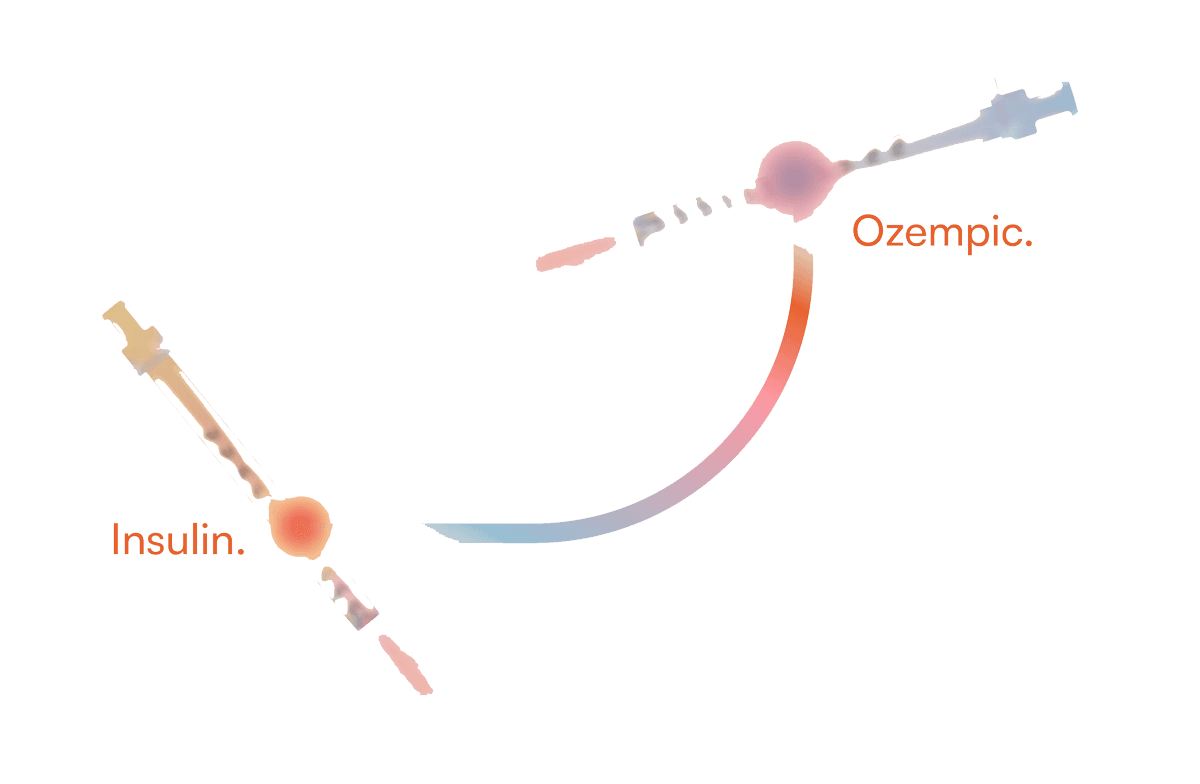
The line from insulin to Ozempic runs through a century of discovery

History of insulin explains the Ozempic era better than hype does: identify a useful signal, map its biology, then engineer delivery and stability so the same pathway becomes medically usable.

How does insulin history connect to Ozempic?

Insulin proved that a peptide signal already used by the body could be supplied in a medical context with life-changing effect.

What repeated pattern defines peptide-drug development?

Later peptide drugs followed the same pattern: identify a signal, clarify what it does, and engineer a way to stabilize or deliver it in a usable form.

GLP-1 medicines sit inside that lineage. They are newer tools built on familiar design logic, not a disconnected breakthrough.

Why does this history matter for current decisions?

It keeps the category frame accurate. Individual products differ, but the scientific method behind them stays consistent across generations.

OneMoreThing

Frederick Banting sold the insulin patent to the University of Toronto for one dollar.He said: "Insulin does not belong to me.It belongs to the world."

By October 1923, manufacturers shipped commercial insulin globally.That one-dollar patent has since generated hundreds of billions in pharmaceutical revenue across the industry.Every GLP-1 drug on the market today traces its scientific lineage to that decision.Banting did not ask what insulin was worth.He asked who it belonged to.His answer shaped a century of medicine.

Next
Dozens of peptide drugs already carry FDA approval
References4 sources

How to read these sources

This article uses primary sources and reviews to separate mechanism, human evidence, and context.

ReviewExpert synthesis
Human TrialStudies in people
Show 3 more source types
Official LabelRegulator documents
MechanismCell and pathway logic
Public UpdateNews or announcements
  1. Review

    Signal Transduction and Targeted Therapy

    Springer Nature

    Therapeutic peptides: current applications and future directions. Read source

    Used Here For

    Showing how peptide signaling research broadly led to today's approved therapeutic categories.

    Good For

    A current overview of peptide applications and where the field is moving.

    Not For

    Personal medical advice, treatment selection, or approval claims.

    Signal Transduction and Targeted Therapy, 7
  2. Review

    Physiological Reviews

    American Physiological Society

    The physiology of glucagon-like peptide 1. Read source

    Used Here For

    Grounding the GLP-1 physiology step in the insulin-to-Ozempic timeline.

    Good For

    A comprehensive physiological account of GLP-1 across digestion, insulin, and appetite.

    Not For

    Comparing GLP-1 drugs or making treatment decisions.

  3. Review

    Frontiers in Endocrinology

    Frontiers Media

    The Discovery and Development of Liraglutide and Semaglutide. Read source

    Used Here For

    Tracing the discovery and development path from earlier peptide drugs to liraglutide and semaglutide.

    Good For

    Historical and design context on how GLP-1 drugs were engineered.

    Not For

    Current dosing guidance or head-to-head efficacy comparisons.

    Frontiers in Endocrinology, 10
  4. Human TrialMassachusetts Medical Society

    Triple-Hormone-Receptor Agonist Retatrutide - A Phase 2 Trial. Read source

    Used Here For

    Showing where the drug-development timeline is heading next, with multi-receptor agonists like retatrutide.

    Good For

    Early human efficacy and safety data for a triple-hormone-receptor agonist.

    Not For

    Final approved-dose guidance, since retatrutide was not yet FDA-approved at trial time.

    New England Journal of Medicine, 389(6)