Science / Explained
SERIES: The Gut-Brain ConnectionArticle 1 of 4
The gut reads every meal and reports back to the brain

The gut doesn't just digest a meal. It reads it. Every bite sends a message that travels through the whole body.

Food is an instruction manual for the body.

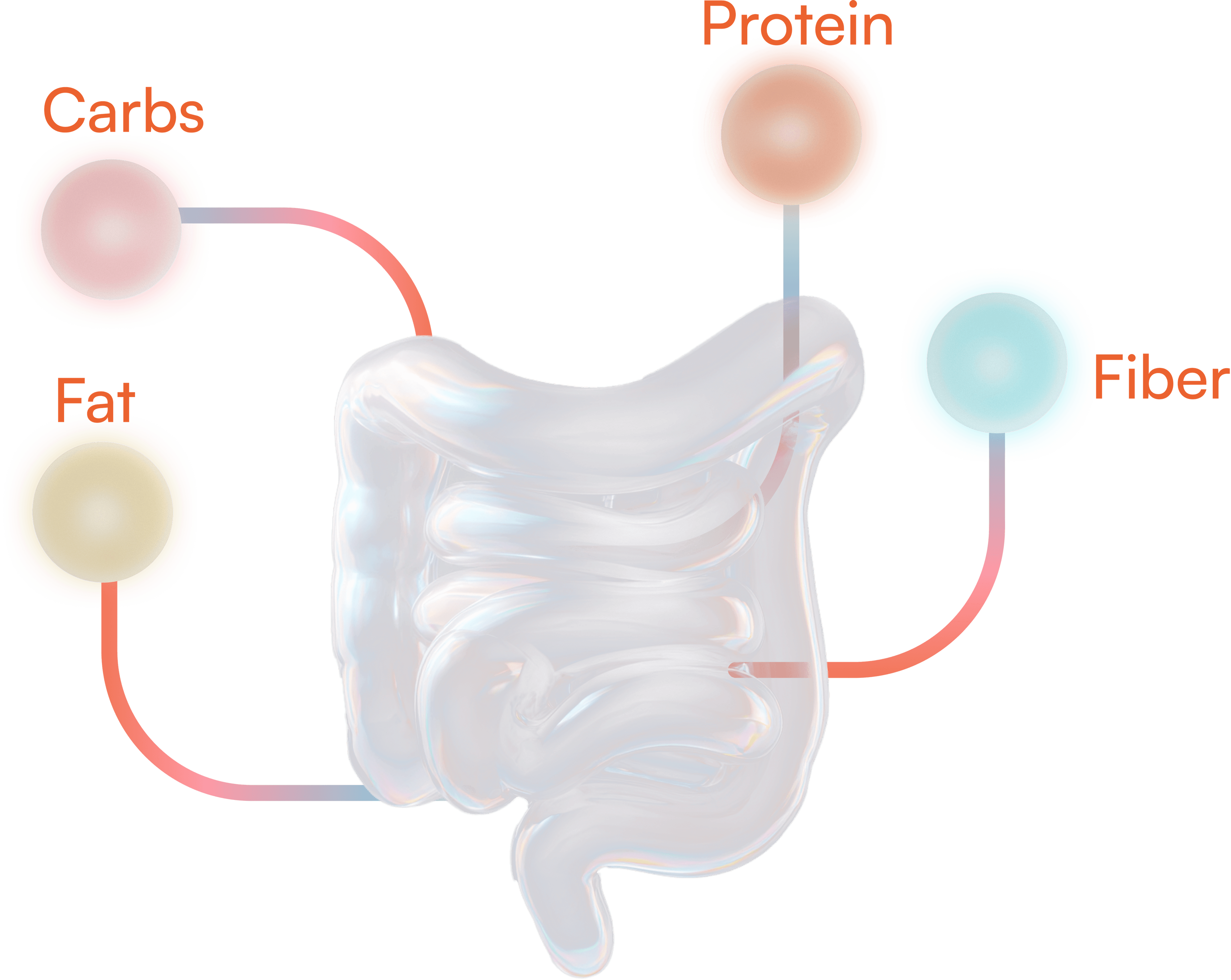
Fiber reaches the gut bacteria, which break it into smaller pieces. That unlocks the sensing cells in the gut lining and prompts them to put out hormones. Protein drives one of the strongest hormone responses. Fat drives a different one. Each nutrient is read separately.

The body doesn't pick those hormones at random. The food sets the response. Salmon triggers one cascade. A salad triggers another. A candy bar triggers a third. The gut is reading the chemical makeup of what it receives.

Meal composition is metabolic input. The gut makes the exact signals that tell the brain what just arrived. Feed it processed carbs day after day, and that becomes the manual the gut learns to follow. Feed it fiber and protein, and the gut learns a different one.

Food is a set of instructions. It sets which hormones the gut produces, and that sets which signals reach the brain.

OneMoreThing

The gut does not just detect that food arrived.L cells in the intestinal wall identify specific nutrients and put out a different hormone mix for each one.Protein drives the strongest GLP-1 response.Fat drives a different peptide mix that slows how fast the stomach empties.Fiber reaches the gut bacteria first, and they break it into short-chain fatty acids that set off a separate group of signals.

The gut reads the chemical makeup of every meal and writes a different metabolic instruction for each.Salmon and a candy bar produce completely different hormonal programs.

Next
One meal lights up four regions of the brain
References2 sources

How to read these sources

This article uses primary sources and reviews to separate mechanism, human evidence, and context.

ReviewExpert synthesis
Show 4 more source types
Official LabelRegulator documents
Human TrialStudies in people
MechanismCell and pathway logic
Public UpdateNews or announcements
  1. Review

    Physiological Reviews

    American Physiological Society

    Ghrelin, CCK, GLP-1, and PYY(3-36): Secretory Controls and Physiological Roles in Eating and Glycemia in Health, Obesity, and After RYGB. Read source

    Used Here For

    Grounding how different gut hormones respond to specific macronutrients after a meal.

    Good For

    A comprehensive review of gut-hormone secretion patterns across eating states.

    Not For

    Personal dietary or medical advice.

    Physiological Reviews, 97(1), 411-463, comprehensive review of macronutrient-specific gut-hormone secretion
  2. Review

    Proceedings of the Nutrition Society

    Cambridge University Press

    Control of appetite and energy intake by SCFA: what are the potential underlying mechanisms? Read source

    Used Here For

    Explaining the fiber/short-chain-fatty-acid pathway specifically, as one route meals signal the gut.

    Good For

    Understanding proposed mechanisms linking fiber fermentation to appetite regulation.

    Not For

    Concluding a specific fiber intake will produce a specific appetite effect.

    Proceedings of the Nutrition Society, 74(3), 328-336, fiber/SCFA pathway specifically